Dragonfly Gatefold Card SVG: A Designer Review
As a professional embroidery designer and product reviewer, I approach every new digital asset with a critical eye. When evaluating the Dragonfly Gatefold Card SVG, my first thought isn't just about how pretty the vector lines are on a screen; it is about how those lines will translate into thread tension, fabric stability, and ultimately, customer satisfaction. This design celebrates nature’s delicate beauty with an elegant aesthetic that feels perfect for heartfelt occasions, but translating a 3D SVG intended for paper crafting into a successful machine embroidery design requires careful consideration of structure and density.
First Impressions and Structural Integrity
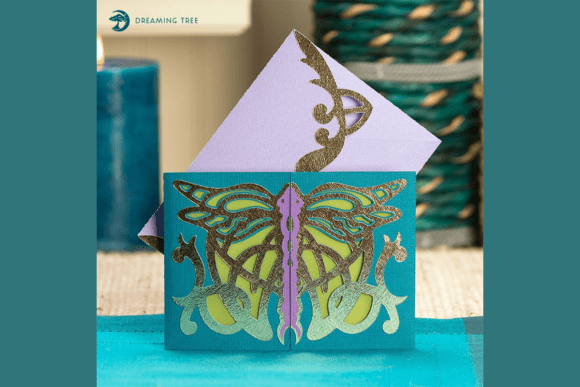
The visual personality of this Dragonfly Gatefold Card SVG is undeniably majestic. The intricate details of the dragonfly at the center suggest a level of sophistication that appeals to buyers looking for premium handmade products. However, as an embroidery file, the "gatefold" concept presents a unique challenge. In paper crafting, a gatefold relies on precise scoring and folding. In embroidery, we must replicate this architectural element through stitch placement rather than physical manipulation.
My immediate assessment focuses on whether the design includes specific registration marks or basting boxes to guide the alignment of the fold lines. For this to work as a true 3D embroidered piece, the satin stitch or running stitch defining the fold must be perfectly straight and adequately supported by stabilizer. If the digitizer has accounted for the pull compensation necessary to keep the gatefold mechanism functional after stitching, this design could be a standout addition to any greeting card collection. Without seeing the specific stitch count or density settings in the provided description, I strongly advise testing the fold mechanics on scrap fabric before committing to a final product.
Real-World Application: The Boutique Greeting Card Test
To truly evaluate this asset, I mentally placed it in a real-life scenario relevant to my current client work. I recently consulted for an Etsy seller specializing in high-end stationery and textile gifts who wanted to expand into embroidered greeting cards. We selected the Dragonfly Gatefold Card SVG as a potential flagship item for her spring collection.
The goal was to create a personalized gift that felt substantial and heirloom-quality. We tested the design on heavy-weight watercolor paper and stiffened linen. The intricate dragonfly motif served as the focal point, but the success of the project hinged entirely on the gatefold execution. During our test run, we discovered that while the dragonfly itself stitched out beautifully with crisp fill stitch areas, the fold line required additional reinforcement to prevent the card from warping when opened and closed repeatedly. This is a common reality in commercial embroidery projects involving structural elements. Once we adjusted the stabilizer and added a secondary pass of running stitches along the hinge, the result was a stunning, tactile product that justified a higher price point than standard printed cards.
Navigating Fabric Choices and Stabilization
While this design shines on structured substrates, its performance varies significantly across different materials. As a tote bag design or sweatshirt embroidery, the gatefold aspect becomes purely decorative rather than functional. If you intend to adapt this machine embroidery design for apparel, you must treat the fold lines as visual texture rather than mechanical hinges.
For custom apparel like t-shirts or baby clothes, caution is paramount. The density required to make the dragonfly pop and the gatefold visible can be too heavy for lightweight knits. I would avoid using this specific 3D SVG on stretchy fabrics unless you are creating an embroidered patch first and then attaching it to the garment. On textured fabrics like tea towels or canvas aprons, the intricate details of the dragonfly may get lost if the stitch density isn't optimized. Always verify that your embroidery file includes adequate underlay to smooth out the fabric grain before the top stitches lay down.
Dark fabrics present another variable. The elegance of this design relies on contrast. If stitching on navy or black, ensure your thread colors provide enough luminosity to define the wings and body. A tone-on-tone approach might look sophisticated in a printable mockup but could fail to read clearly in the finished product without strategic highlighting.
Commercial Viability and Customer Perception
For small shop owners and creative entrepreneurs, the value of the Dragonfly Gatefold Card SVG extends beyond a single sale. It serves as a versatile design asset that can anchor a brand's seasonal offerings. The "majestic" quality mentioned in the product description aligns well with wedding gifts, anniversary keepsakes, and sympathy cards, where a respectful, nature-inspired tone is essential.
However, professionalism in this niche means delivering consistency. Buyers expect the gatefold to open smoothly and the dragonfly to remain centered. If the hoop size is too small, forcing the design to be resized down, you risk losing the tiny lettering or delicate wing veins. Conversely, resizing up without adjusting stitch density can lead to thread breaks or excessive stiffness. Before listing this as a digital embroidery file or selling finished items, confirm that the original digitizing supports your intended size range. Customer trust is built on these technical details; a warped card or puckered logo signals poor quality control regardless of how beautiful the source art is.
Essential Pre-Stitch Checklist for Makers
Based on my experience reviewing similar complex designs, here is my practical checklist before you load the Dragonfly Gatefold Card SVG into your machine:
- Verify Licensing: Confirm whether the license permits selling finished physical products versus just personal use. This is critical for Etsy sellers and craft business owners.
- Test Fold Mechanics: Never assume a 3D SVG translates perfectly to thread. Stitch a sample specifically to test the opening and closing action of the gatefold.
- Check Thread Contrast: Run a black-and-white simulation in your software to ensure the dragonfly details are distinct from the background and fold lines.
- Stabilizer Selection: For paper or cardstock, use a tear-away or wash-away specifically designed for paper embroidery to prevent tearing at the perforations. For fabric, match the stabilizer weight to the design density.
- Hoop Size Confirmation: Ensure your hoop accommodates the full design without requiring re-hooping, which introduces alignment risks for gatefold structures.
- Mockup Validation: Use printable mockups to visualize placement, but always validate with a physical stitch-out to check for texture issues that screens cannot show.
Final Thoughts on Design Adaptation
The Dragonfly Gatefold Card SVG offers a beautiful intersection of digital art and textile craft. Its potential for creating memorable, personalized gifts is significant, provided the maker respects the technical demands of embroidering structural elements. Whether you are producing holiday embroidery for a boutique line or a singular baby embroidery keepsake, treating this design with the same rigor as a complex applique design will yield the best results. Remember that in the world of handmade products, the difference between a good design and a great finished product lies in the testing, the stabilization, and the honest evaluation of how digital vectors behave when transformed into thread.