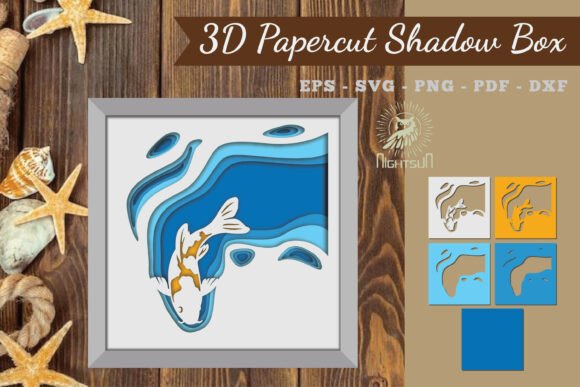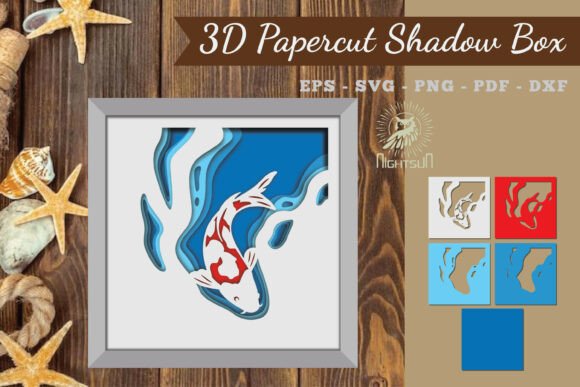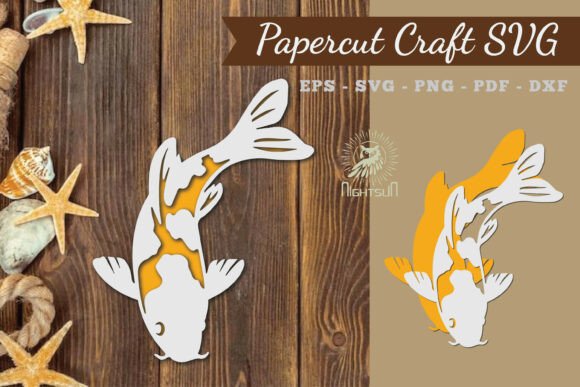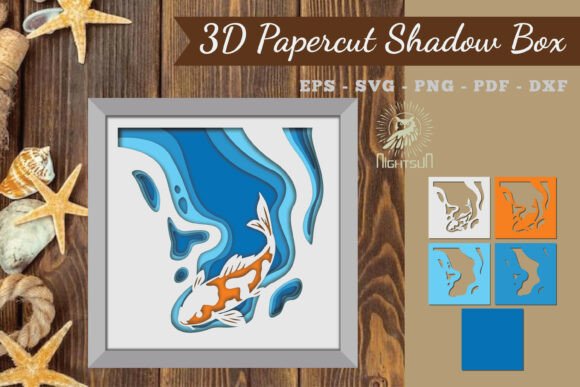
Koi Fish 3D Papercut Shadow Box SVG 2 Review
First Impressions: Translating Paper Art to Thread
As a designer who constantly bridges the gap between digital assets and tangible textiles, my first look at Koi Fish 3D Papercut Shadow Box SVG 2 was analytical rather than purely aesthetic. While this file is categorized under Other and marketed as a 3D SVG for cutting machines, my immediate question was whether its intricate, layered geometry could survive the transition into a machine embroidery design. The visual mood is undeniably striking; it captures the fluid grace of koi with the sharp, deliberate precision of laser-cut paper. For an embroidery digitizer or a crafter looking to adapt vector art, this design offers a unique challenge. It does not look like traditional clipart. Instead, it possesses a structural integrity that suggests it would work beautifully as an applique design or a dense fill stitch composition, provided the layers are managed correctly.
The personality of this design is serene yet complex. It avoids the cartoonish vibe often found in fish motifs, leaning instead toward modern elegance. This makes it a strong candidate for high-value items rather than quick craft fair fillers. When I evaluate a digital embroidery file for potential adaptation, I look for clean lines and distinct separation between elements. Koi Fish 3D Papercut Shadow Box SVG 2 excels here. The negative space is just as important as the positive shapes, which is crucial when planning stitch density. If you are considering this for your next embroidery project, understand that you are not just stitching a picture; you are replicating an architectural shadow effect using thread.
Real-World Application: The Custom Tote Bag Test
To truly judge the viability of this asset, I mentally placed it onto a heavy-duty canvas tote bag intended for a boutique client. Canvas is unforgiving; it demands bold lines and sufficient stabilizer. In this scenario, Koi Fish 3D Papercut Shadow Box SVG 2 serves as an excellent centerpiece. Because the original files include AI CS6, EPS, and DXF formats, a digitizer has ample data to create clean satin stitch borders around each "paper" layer. For a tote bag design, I would recommend adapting the inner details into running stitch accents while keeping the outer silhouette as a solid fill or applique. This reduces bulk while maintaining the 3D illusion.
Customer reaction to this style tends to be highly positive because it looks engineered rather than merely decorated. On a natural canvas background, using deep indigo and coral thread colors would create a sophisticated contrast that elevates the perceived value of the handmade product. This specific application works because the tote bag provides a flat, stable surface necessary for the precise alignment this design requires. Whether you are an Etsy seller creating personalized gifts or a small shop owner stocking branded merchandise, this design translates well to functional items where durability and aesthetics must coexist. However, always verify your licensing before selling finished products derived from these design assets.
Navigating Fabric Limitations and Hoop Constraints
While the design is versatile, it is not universally forgiving. The intricate nature of a papercut style means that Koi Fish 3D Papercut Shadow Box SVG 2 requires careful fabric selection. I would advise against using this on stretchy knits or lightweight jersey without significant modification. The stitch density required to mimic the opaque layers of a papercut can cause puckering on unstable fabrics. If you are attempting sweatshirt embroidery or baby embroidery, you must use a high-quality cutaway stabilizer and potentially reduce the internal fill density to maintain garment drape.
Hoop size is another critical factor. This design likely contains fine details that will be lost if scaled down too aggressively for a 4x4 hoop. Small lettering or tiny decorative accents inherent to the papercut style may turn into thread nests if pushed beyond their limits. Always test the design on scrap fabric matching your final project weight. For curved surfaces like caps, this specific 3D SVG geometry might be too rigid; the flat planes of the design fight against the curve of the hat. Stick to flat surfaces like pillow covers, tea towels, aprons, or framed hoop art. Dark fabrics also present a challenge; unless you plan to use a white underlay or applique base, the shadow effects may disappear entirely. Always compare light and dark fabric backgrounds in printable mockup software before committing thread to fabric.
Elevating Brand Value Through Technical Precision
Using a design like Koi Fish 3D Papercut Shadow Box SVG 2 signals professionalism. In a saturated market of generic embroidery patterns, this style stands out because it mimics a different medium entirely. For creative entrepreneurs and commercial embroidery businesses, this distinction builds customer trust. When a buyer sees a finished product where the stitch direction follows the flow of the koi’s movement and the layers appear physically distinct, they recognize the craftsmanship. This directly impacts giftability and buyer engagement. A holiday embroidery project featuring this motif feels more like heirloom art than seasonal kitsch.
Furthermore, the inclusion of high-quality PNG and PDF files alongside the vector sources allows for superior marketing. You can create accurate digital product previews and printable mockups without needing to stitch a sample first. This efficiency is vital for Etsy sellers and digital product sellers managing large inventories. However, remember that visual appeal relies on execution. Ensure your thread colors complement rather than clash. The design’s complexity means that poor color choices will result in visual noise. Stick to tonal variations or high-contrast pairings to preserve the readability of the 3D effect.
Essential Designer Notes for Successful Adaptation
Before you load this file into your digitizing software or send it to production, adhere to these practical guidelines:
- Verify File Compatibility: While you receive SVG, AI, EPS, DXF, PDF, and PNG files, none are native embroidery formats (like PES or DST). You must digitize or hire a digitizer to convert these vectors into a stitch file suitable for your machine.
- Test Stitch Density: Papercut designs can become bulletproof if digitized with standard fill settings. Request or apply light-density fills or textured stitches to keep the fabric pliable.
- Check Licensing Terms: Confirm whether your purchase allows for commercial embroidery of finished products versus digital resale. Protect your business by understanding the usage rights.
- Stabilizer Selection: Due to the likely density of this design, use a firm cutaway stabilizer for apparel and a tear-away or wash-away for non-stretch woven fabrics.
- Mockup Validation: Use the included High Quality PNG to test placement and scale on your chosen garment template before stitching. This saves time and materials.
- Detail Inspection: Zoom in on the vector nodes. If any gaps exist between layers in the SVG, close them in Illustrator or your digitizing software to prevent registration errors during stitching.
Ultimately, Koi Fish 3D Papercut Shadow Box SVG 2 is a premium foundation for makers willing to put in the technical effort. It rewards patience with a stunning, multidimensional result that transcends typical craft expectations. By respecting the fabric limitations and leveraging the high-quality source files, you can transform this digital asset into a signature piece for your collection.