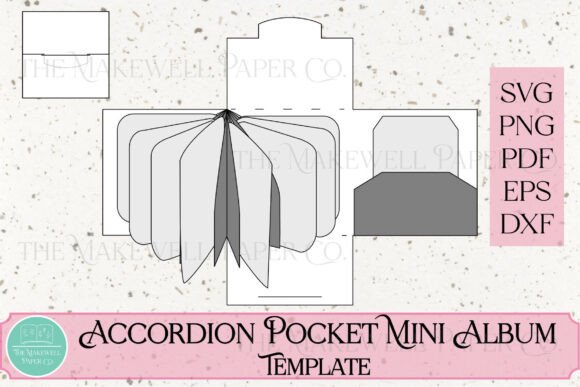
Accordion Pocket Mini Album Template: A Maker's Review
As a designer who bridges the gap between digital fabrication and textile arts, I approach every new template with a specific question: does this translate from screen to physical reality? When evaluating the Accordion Pocket Mini Album Template, my perspective shifts from simple papercraft to structural embroidery potential. While this listing provides a blank cut file template intended for cutting machines, an experienced embroidery digitizer sees something different. We see a roadmap for creating textured, dimensional fabric albums. This review explores how to adapt these vector lines into a tangible machine embroidery design that holds up in real-world use, specifically for makers and small business owners looking to expand their product lines beyond standard flat stitching.
First Impressions: Structural Integrity Over Decoration
My initial assessment of the Accordion Pocket Mini Album Template focuses on geometry rather than ornamentation. In the Lifestyle And Hobbies category, many templates are overly intricate, prioritizing visual complexity over assembly logic. This template feels different. The clean lines suggest a modular system where the "pockets" and "belly bands" serve as functional anchors. For an embroidery professional, this is promising. It implies that if we convert these cut lines into registration marks or placement stitches, the resulting fabric album will actually function as a book rather than just a decorative object.
The mood here is utilitarian elegance. It lacks the chaotic density of some freebie files, which often leads to puckering when stitched out. Instead, the layout respects negative space. This is crucial when translating a 3D SVG concept into thread. We aren't trying to replicate paper; we are interpreting structure through fabric layers. The template’s simplicity allows the texture of the linen, canvas, or felt to become part of the design narrative, rather than fighting against it.
Real-World Application: The Custom Memory Book Project
To truly test this template’s viability, I mentally prototyped a project for a client requesting a personalized baby memory book. Standard machine embroidery often fails here because stiff stabilizers make pages unturnable. Using the Accordion Pocket Mini Album Template as a guide, I envisioned a hybrid approach. The template’s pocket outlines would serve as guides for an applique design using soft cotton voile, while the belly band sections would feature denser satin stitch borders to provide structural reinforcement without rigid backing.
In this scenario, the template acts as the skeleton. For a tote bag design or a standalone keepsake, the accordion fold requires precise alignment. If I were selling this as a finished handmade product on Etsy, customer trust hinges on those folds being crisp and the pockets actually holding photos. The template’s proportions appear balanced for 4x6 photographs, but as an embroiderer, I must account for seam allowances and stitch pull. A digital line has no thickness; a running stitch placement line takes up 1mm of real estate. This template seems forgiving enough to accommodate that shift, making it suitable for commercial embroidery workflows where consistency across multiple units is non-negotiable.
Navigating Fabric Limitations and Hoop Constraints
Adapting a cut file for needle and thread requires caution. Not every surface accepts this level of structural stitching. I would advise against using this template for stretchy knits or lightweight quilting cotton without significant modification. The tension required to create a functional pocket will distort unstable fabrics. This design belongs on medium-weight linens, denim, or craft felt. These materials support the stitch density needed to define the accordion mechanism without tearing.
Hoop size is another critical variable. The accordion format implies length. Before purchasing or digitizing, verify that your machine can handle the span of the open template, or plan for multi-hooping with perfect alignment marks. Dark fabrics present a challenge; the subtle topography of an embroidered pocket can get lost without high-contrast thread. Furthermore, avoid placing detailed corner accents near the edge of the hoop where tension is inconsistent. For items like custom apparel or nursery decor that require washing, ensure all raw edges defined by the template are enclosed. An exposed cut edge in paper is fine; in fabric, it is a failure point.
Elevating Perceived Value Through Precision
Why go through the trouble of converting a cut file for embroidery? Because the market is saturated with flat prints. A fabric album created from the Accordion Pocket Mini Album Template offers tactile engagement that digital products cannot match. For Etsy sellers and boutique owners, this distinction justifies a higher price point. The value lies in the intersection of precision engineering and handmade warmth.
When executed correctly, the stitching clarity communicates professionalism. Buyers can distinguish between a rushed job and a thoughtfully constructed item. The template’s organized layout helps maintain brand consistency. If you offer a matching embroidered patch or holiday embroidery set, using the same geometric language ties the collection together. This visual coherence builds recognition. Moreover, offering a printable mockup derived from the original PNG or PDF files allows customers to visualize the final personalized gift before production begins, reducing friction in the sales process.
Essential Notes for the Embroidery Digitizer
Before you load this template into your digitizing software or cutting mat, consider these practical directives derived from years of textile production:
- Test on Scrap Fabric First: Never assume the digital dimensions equal physical results. Stitch a single pocket segment on your intended final fabric to check for shrinkage or distortion.
- Verify Licensing: This listing specifies it is a blank cut file template. Confirm whether the license permits converting the vector art into a digital embroidery file for commercial sale. Do not assume cross-format rights.
- Analyze Stitch Density: Since this is originally a cut file, there is no pre-set density. You must manually assign appropriate densities for fill stitches versus outline stitches to prevent bulletproof stiffness.
- Check Thread Color Contrast: Test the design in black and white mockups. If the pocket definition disappears in grayscale, it will likely lack visual depth in low-contrast thread colors.
- Select Proper Stabilizer: For a 3D structure, tear-away is rarely sufficient. Use a cut-away mesh or fusible poly-mesh to maintain the accordion shape without adding excessive bulk.
- Inspect Small Details: Review the PDF or EPS files at 100% zoom. Tiny tabs meant for paper glue may be too small for a needle. Redraw these elements to be at least 2mm wide for safe stitching.
- Compare Backgrounds: The template may look vastly different on white versus navy fabric. Create separate colorways or adjust underlay stitches accordingly.
Final Thoughts on Adaptation
The Accordion Pocket Mini Album Template represents a valuable asset for the creative entrepreneur willing to do the translation work. It is not a plug-and-play embroidery file, but rather a foundational blueprint for innovation. By respecting the material constraints and leveraging the template’s strong structural logic, makers can produce small shop products that stand out in a crowded marketplace. Whether you are crafting a unique wedding gift or expanding your design assets library, success lies in treating this template as a starting point for textile engineering, not just a digital download. Always prioritize the physical behavior of thread and fabric over the perfection of the vector line, and your finished projects will reflect both artistic vision and technical mastery.